

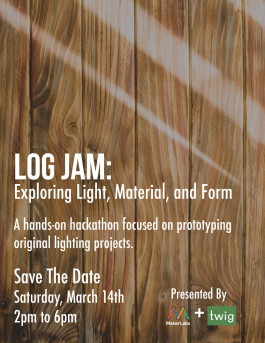
A Hackathon Exploring Light, Material, and Form
March 14
Maker Labs – 780 E Cordova St, Vancouver – Parking is available on site.
2:00 – 6:00 PM
*Ticket reserves your spot and gets you snacks and refreshments
Building on the success of our first Log Jam in November, we’re bringing it back with a more focused theme, while keeping the same open space to explore.
Join us at MakerLabs for a hands-on hackathon focused on prototyping original lighting projects. This event challenges participants to explore how light interacts with materials, form, and space. Participants will work in teams to prototype functional or conceptual lighting pieces using wood, sheet goods, and other maker-friendly materials. Working in collaboration with MakerLabs’ members and staff, teams will use tools available in our woodshop, including the CNC Router and Laser Cutter.
This event is ideal for designers, engineers, makers, and industry partners who want to collaborate and learn from each other, while building something tangible. Whether you’re experimenting with joinery-driven lamp structures, CNC-milled diffusers, or laser-cut patterns that shape and scatter light, this is an opportunity to push both design and fabrication skills and deepen your knowledge about wood.
No prior lighting design experience required—just an interest in making, problem-solving, and working with light.
We encourage you, if you have them, to bring personal wood materials, components, or any elements you’d like to incorporate into your prototype. Bonus points if your wood is locally collected or BC-origin. We’ll also have materials on-site for prototyping, including wood bits and LED parts.
Connecting people to inspire innovation in wood since 2012.
TWIG operates on the unceded territories of the Indigenous Peoples who have lived in deep relationship with the lands and forests we now call British Columbia since time immemorial. We recognize and honour the enduring stewardship, knowledge, and cultures of these Nations—whose care over generations shaped the very forests that gave rise to BC’s forestry industry. We also acknowledge the devastating impacts of colonization, including the near-erasure of many old-growth ecosystems and the displacement of Indigenous communities and cultural practices connected to these ancient forests.
As we work to shape the future of BC’s forest products industry, we are committed to pathways that integrate Indigenous perspectives, support cultural resurgence, and foster a renewed relationship to land, materials, and community—one grounded in respect, regeneration, and transformative change.
.